Check thermostat mode and target temperature
Make one ordinary control adjustment, confirm what the display requests and preserve useful information if heating or cooling still does not respond.
Follow the steps25 practical guides for everyday checks, home care and project planning. Check off steps, record observations, print your notes, or include them in a service request.
Choose one task at a time. Each guide explains who it applies to, what you need, what to expect and what to do if the problem remains. Your equipment’s homeowner instructions take priority.
You do not need to complete these checks before requesting service. We serve Burbank, Oak Lawn and Chicago’s south and southwest suburbs.
Request serviceCall 708-674-3600Choose ordinary homeowner tasks or service-planning checklists. Electrical compartments, wiring, refrigerant, fuel systems and safety controls need a qualified professional. A gas odor, CO alarm, smoke or fire calls for leaving the building and contacting emergency services or your utility from a safe location.
25 guides found
Make one ordinary control adjustment, confirm what the display requests and preserve useful information if heating or cooling still does not respond.
Follow the steps
Use the ordinary fan control to distinguish a continuous indoor fan request from heating or cooling operation, without changing system configuration.
Follow the steps
Find out why a target changes later, make a temporary adjustment deliberately and return to the normal schedule without erasing programming.
Follow the steps
Confirm the exact model and battery type, use only its documented homeowner compartment and keep the wall base and all wiring untouched.
Follow the steps
Separate a home-network outage, app-access problem and thermostat power concern using ordinary screens and a second connected device.
Follow the steps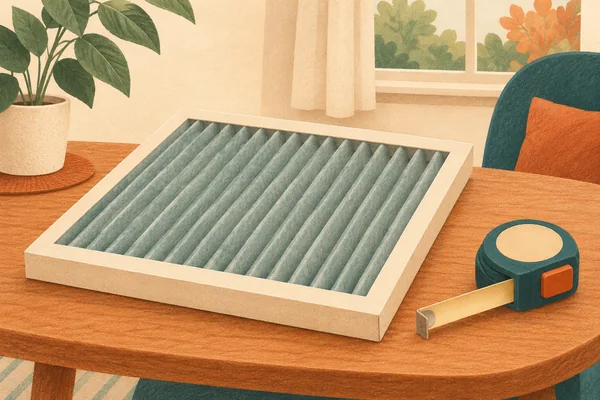
Record the filter label, distinguish nominal and actual dimensions, and confirm the equipment requirement instead of buying the closest-looking size.
Follow the steps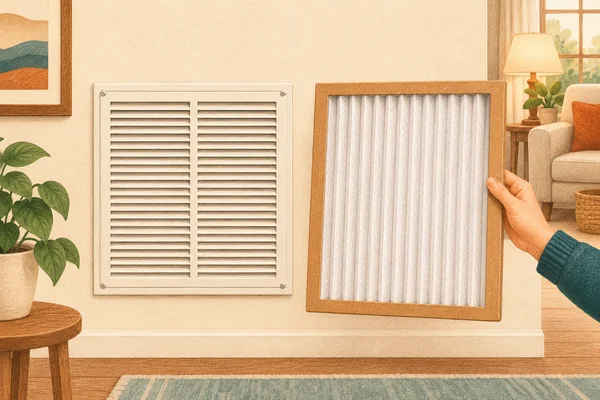
Match the specified media, follow the equipment’s shutdown instructions, orient the airflow arrow and close the intended filter access before returning to normal use.
Follow the steps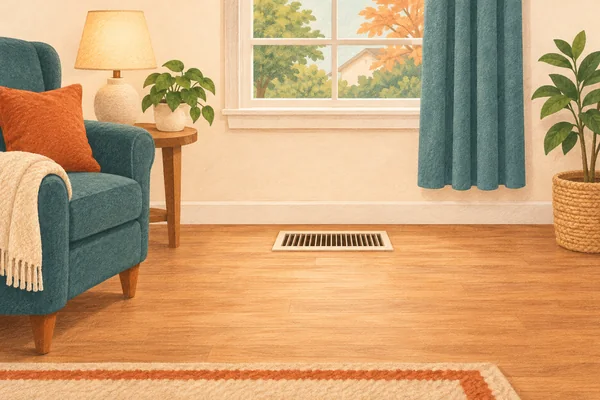
Move everyday obstructions away from accessible supply and return grilles, then record what changes.
Follow the steps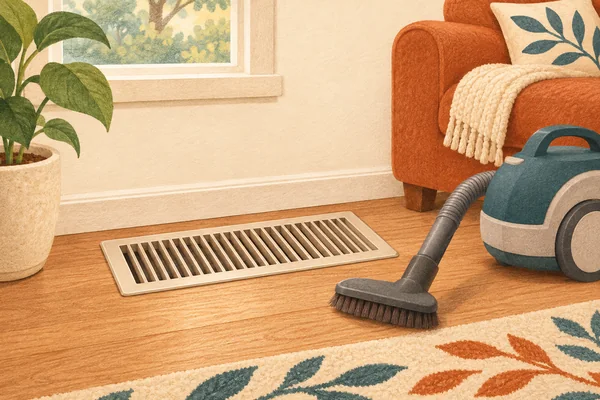
A dry, external-only cleanup for an intact grille you can reach from the floor.
Follow the steps
Turn 'the upstairs is uncomfortable' into a clear record without adjusting ducts or opening equipment.
Follow the steps
Collect reliable room observations and recognize when moisture needs a source-based assessment.
Follow the steps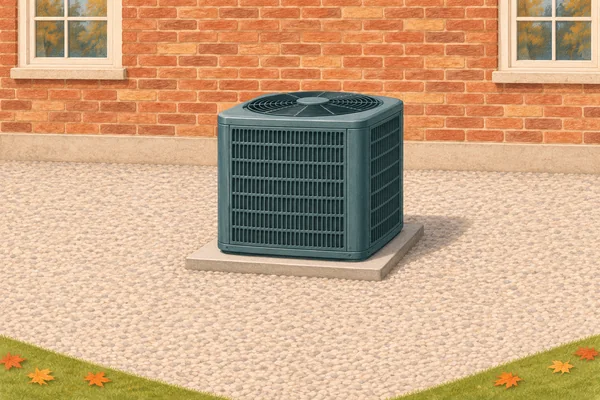
Look for crowding and remove only loose ground debris that is safely clear of the equipment.
Follow the steps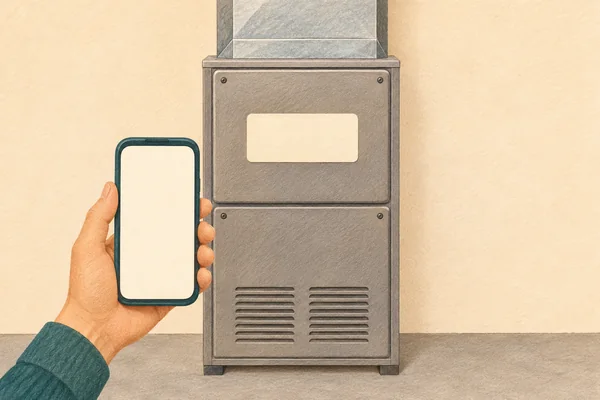
Use records and externally visible labels to identify the actual component involved.
Follow the steps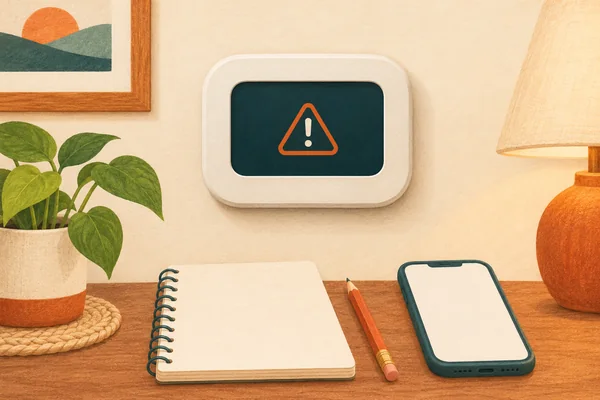
Capture the exact screen text and context so a service provider can assess the correct equipment.
Follow the steps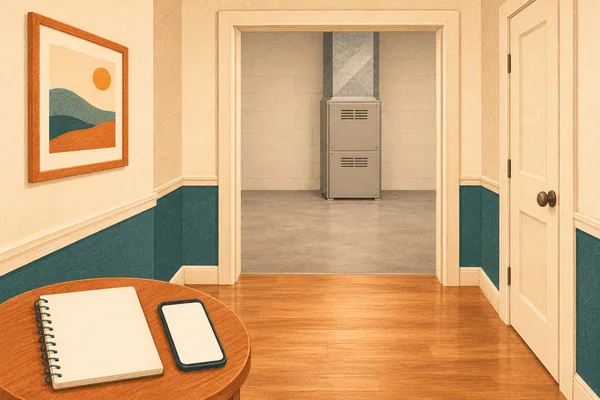
Organize a symptom note, useful records and safe access so the conversation can focus on the problem.
Follow the stepsTurn unfamiliar heating and cooling equipment, controls and inherited paperwork into a useful household reference without opening equipment.
Follow the stepsOrganize the equipment records, homeowner demonstration and outstanding questions at the end of a heating or cooling installation.
Follow the stepsTurn two repair offers into a clear list of findings, scope differences and questions before deciding what to authorize.
Follow the stepsBuild a dated equipment-care timeline that separates completed work, observations, recommendations and unresolved follow-up.
Follow the stepsOrganize observations and a useful follow-up request for your landlord or property manager without changing shared equipment or assuming repair authorization.
Follow the steps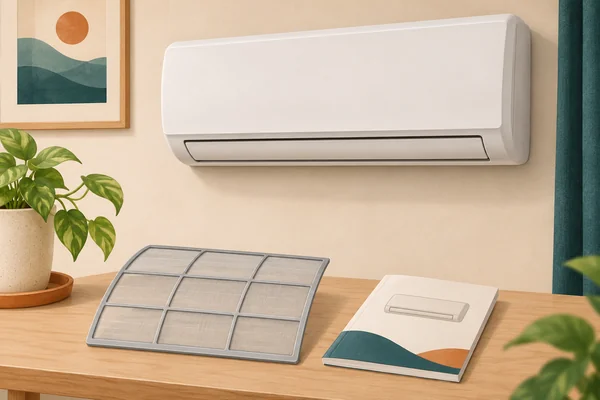
Use the exact model's filter instructions, safe floor-level access and correct cleaning or replacement method without opening service panels.
Follow the stepsPlan model-specific vacation controls, property protection, check-ins and return settings without choosing universal temperatures.
Follow the stepsMake an observation record of ordinary heat-pump behavior without forcing defrost, changing modes or removing ice.
Follow the stepsMatch a filter-based air cleaner to its intended room and manual, then check placement, access and ordinary operation.
Follow the stepsRecord billing days, metered units, reading type, current charges and weather context without sharing account details.
Follow the stepsAI-generated illustrations explain the topic. Equipment, labels, controls and access points vary by model; use the written steps and your equipment instructions.
Write down what you checked and what happened. That gives the service conversation a clearer starting point.