A musty odor at AC startup can involve moisture at the coil, drain pan, ducts, filter area or elsewhere in the building. Odor does not identify mold or prove the ducts need cleaning. Record when and where it occurs, look only at safely visible areas, and investigate moisture before buying deodorizing treatments.
Odor is a clue, not a mold test
A musty smell that appears when cooling starts suggests that air movement or cooling operation is interacting with an odor source. That source might be at the cooling coil, drain pan, filter area, duct insulation, a damp basement, or another part of the building. The timing makes the HVAC system relevant, but it does not identify a specific organism or prove the ducts are the origin.
The first useful question is where the odor is strongest and how long it lasts. An odor at one register suggests a different investigation from a smell throughout the home before the blower even starts. A seasonal startup pattern can also differ from an odor that appeared after a roof leak or equipment repair.
Avoid choosing a treatment from the description alone. A fragrance can hide an odor temporarily while the water source remains. A responsible assessment connects the reported pattern to visible conditions and appropriate testing or inspection.
Five places the investigation may go
Several moisture pathways can affect the air the system circulates. They deserve separate consideration because the repairs differ. Cleaning an air grille will not correct a wet wall cavity, and a room dehumidifier will not repair a leaking drain pan.
These are inspection categories rather than a reason to order every available cleaning service. Ask the professional to identify what is actually affected. If a substance is described as mold, ask what supports that identification and whether its extent requires a specialist beyond ordinary equipment maintenance.
- The cooling coil and condensate collection area, where moisture is expected but must be managed appropriately.
- The drain or condensate pump, where water should leave through the intended route.
- The filter, rack, and nearby insulation, which should not remain wet.
- Ducts or surrounding materials affected by leakage, condensation, or previous water intrusion.
- The building itself, including damp basements, stored materials, plumbing leaks, or rainwater entry.
A step-by-step odor record
Do not intentionally expose yourself to a strong odor or remain in an area that causes symptoms. A gas odor, burning smell, smoke, or CO alarm needs a different response from a mild musty complaint. Leave and seek the appropriate emergency help when those warning signs are present.
Avoid opening the coil cabinet, entering ducts, or using smoke to trace the odor. Those actions can introduce hazards and often add less useful information than a clear timeline.
- Write down when the odor begins relative to cooling startup and how long it remains noticeable.
- Note which rooms or outlets are affected and whether the same smell exists when the system is off.
- Record indoor temperature and humidity with a consistently placed instrument if one is available.
- Note recent rain, water leaks, construction, filter changes, cleaning products, or equipment service.
- Look only at safely visible areas for water, a wet filter, stained materials, or an accessible pump alert.
- Share the pattern and photographs with the professional arranging the inspection.
Why moisture correction comes before deodorizing
Moisture management addresses the conditions that can allow recurring odor and material damage. If water continues entering an area, a treatment applied to the visible surface may have only temporary effects. The source can also be outside the HVAC system, making an equipment-only treatment incomplete.
Ask whether the assessment includes drainage, the coil area, insulation condition, and nearby building sources as appropriate. The findings should distinguish ordinary condensation in its intended path from unwanted wetting elsewhere. If an air leak causes condensation on a cold surface, correcting that condition differs from clearing a blocked drain.
Do not spray bleach, disinfectant, perfume, or a consumer odor product into ducts or equipment. Product suitability depends on the material and intended use. Chemical treatment should not be accepted as a substitute for identifying the source, and an unverified claim of sanitizing the whole home is not a useful completion standard.
Does the fan setting matter?
Fan operation changes how air moves through the system and rooms. On some cooling systems, continuous fan operation between cooling cycles can affect moisture behavior at the wet coil. The details depend on the equipment and controls. Record the current fan mode and ask the technician whether it is appropriate for the installation and humidity concern.
Do not assume that switching from On to Auto is a complete repair. It may change when the odor is noticed without correcting a contaminated drain area, wet insulation, or a building leak. Conversely, a documented circulation or ventilation arrangement may have reasons for a particular fan schedule.
The service discussion should connect settings to the equipment's intended operation. Ask what changed, why it changed, and which observations should improve. If the odor persists, retain the original pattern and the revised setting so the next assessment can evaluate the result rather than start over.
When duct cleaning is and is not the answer
EPA does not recommend routine duct cleaning as a universal preventive measure. A light dust layer is different from substantial contamination, vermin, or excessive debris being released into the home. A musty odor alone cannot determine whether the ducts meet a condition that justifies cleaning.
If a contractor recommends duct work, ask to see the affected area and discuss the material. Wet or contaminated insulation may require a different response from cleanable hard surfaces. The contractor should explain how the water source will be corrected and how the work avoids spreading material into occupied rooms.
Separate the proposed scope into inspection, source repair, cleaning or replacement, and verification. That makes competing proposals easier to compare. Avoid an inexpensive whole-house cleaning offer that becomes an unsupported demand to coat every duct. Ask for evidence and written details before deciding what the building actually needs.
What if the odor is strongest in the basement?
A return-air system can circulate odors originating in a basement or utility area. Damp storage, a floor drain, foundation seepage, laundry, plumbing issues, and other sources may be relevant. The blower starting may make an existing building odor more noticeable without creating it.
Note whether the basement smells musty before cooling starts and whether the odor changes after rain. Keep equipment access clear and move belongings only if it is safe. Do not disturb suspect building materials or enter a confined or flooded area to investigate. A plumbing or building-envelope assessment may be appropriate alongside HVAC service.
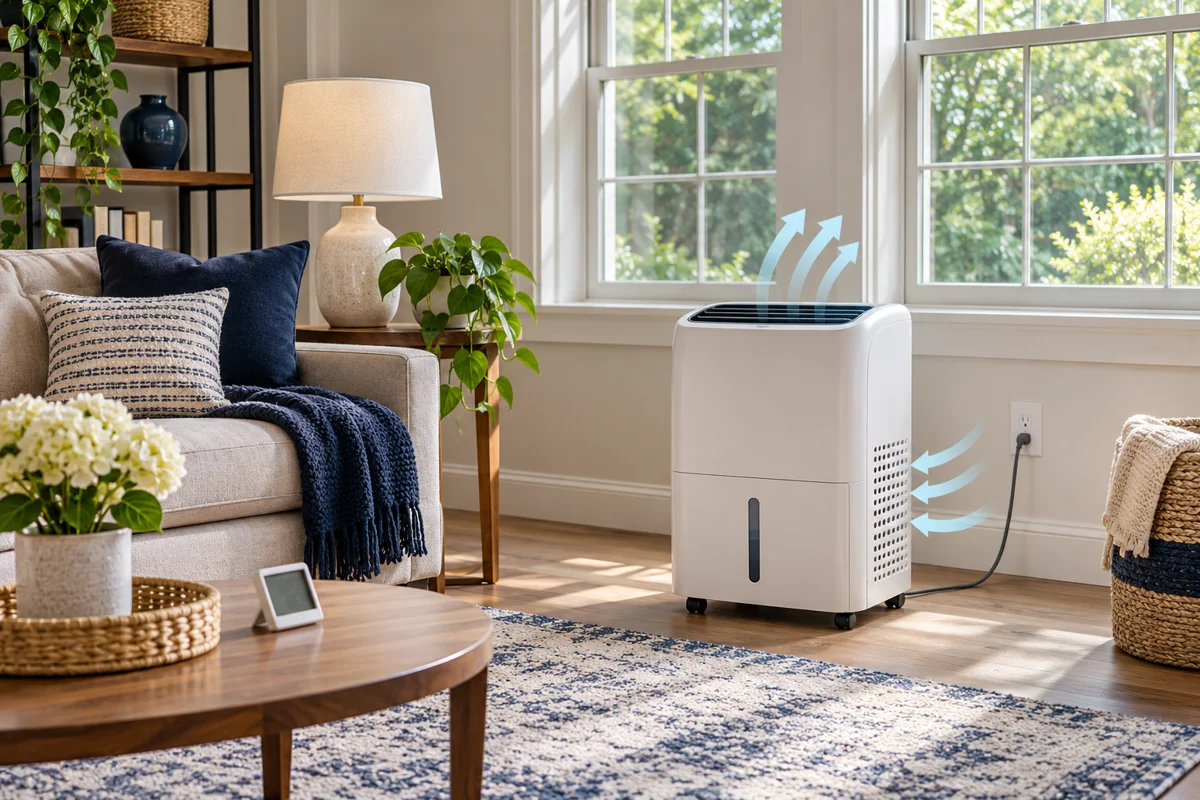
A dehumidifier can help manage suitable moisture loads but does not repair seepage or a failed drain. If one is already operating, record where it is located and whether its water-removal arrangement works. Avoid interpreting a full bucket as proof that the source has been solved; it only shows that water was collected.
Questions about UV lights and other add-ons
Some HVAC accessories are intended for specific air or surface-treatment applications. Their usefulness depends on the exact product, placement, maintenance, and the problem being addressed. They should not be presented as a substitute for correcting water intrusion, unsuitable drainage, or affected building materials.
Ask what evidence supports the proposed accessory in your situation. Clarify whether the target is a coil surface, airborne particles, an odor, or another concern. Request the operating requirements, replacement schedule, ongoing cost, and any relevant exposure limitations. A broad claim that one device makes every duct safe is not a meaningful specification.
Keep the repair and accessory decisions separate. It can be sensible to fix an established drain problem first and evaluate the remaining concern afterward. If an accessory is recommended at the same time, the written scope should explain its distinct purpose and how the intended outcome will be checked.
A useful post-service comparison
After source correction and appropriate cleaning or repair, compare conditions during normal cooling operation. Record whether the odor returns, which rooms are affected, and whether humidity or visible water has changed. Use reasonably comparable conditions rather than testing one cool dry day against a hot rainy day.
Ask what the technician inspected and what could not be accessed. If no source was confirmed, the report should say so rather than imply the absence of visible water proves no moisture problem exists. A persistent concern may require a different inspection scope or another trade.
Keep photographs, service findings, and the dates of any roof, plumbing, or HVAC work together. Intermittent odors can be difficult to reproduce during a single appointment. A well-kept record helps connect a recurrence to weather or operating conditions without guessing from memory. It also supports a more specific follow-up request.
Preparing a local service request
For Clucas Mechanical Heating and Air, describe the odor in ordinary language and explain its timing. Include the property ZIP, equipment type, affected rooms, humidity observations, and any recent water event. State whether you have seen water or only noticed a smell. That distinction helps define the initial assessment.
Coverage and availability in Burbank, Oak Lawn, and nearby south and southwest suburbs are confirmed for the request. Ask whether the visit includes the cooling-coil drainage area and whether building-material concerns may require another specialist. Photographs can help with preparation, but they cannot establish the identity or extent of hidden contamination.
The useful goal is a source-based plan with documented limits. It should explain what caused the concern if established, what work addresses it, and what should happen if the odor returns. That provides more customer value than a temporary fragrance or an unsupported remote mold diagnosis.
Sources & further reading
Research checked November 21, 2026. These sources support the technical principles; the planning worksheets apply those principles to customer decisions. Older technical publications are background, not a statement of current local code. Equipment instructions, applicable requirements, and a qualified property-specific assessment determine the actual work.