An ordinary forced-air filter should not be wet. Possible sources include cooling-coil drainage, condensation, a humidifier leak, or unrelated plumbing or rainwater. Stop equipment use if water threatens electrical parts, avoid opening cabinets, and arrange assessment of the water source before replacing the filter and resuming operation.
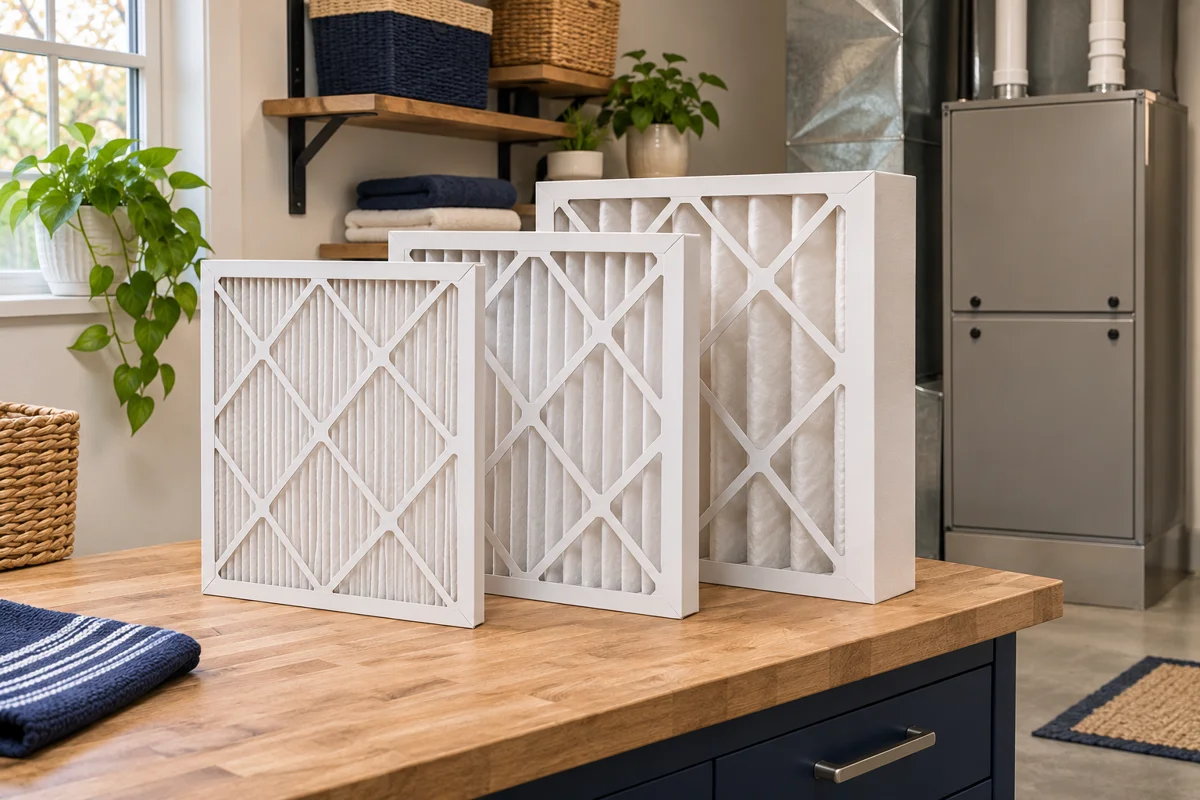
A wet filter is a source problem, not ordinary maintenance
A conventional forced-air filter is intended to handle moving air and particles, not standing water. Wet media can lose shape, restrict airflow, or indicate moisture reaching an area that should remain dry. Installing a fresh filter without identifying the water source can leave the underlying problem unchanged.
The label furnace filter can be misleading during cooling season. In many homes the same blower serves a cooling coil mounted with the furnace. Water produced during cooling should leave through a designed condensate system. A problem above or near the filter can therefore involve cooling drainage even when the furnace burners are not operating.
Other possibilities include a humidifier leak, condensation on nearby cold surfaces, plumbing leakage, or water entering the building. The location and timing help sort those possibilities. None can be confirmed from filter dampness alone, and a wet filter is not proof that the whole HVAC system needs replacement.
Six observations that help locate the source
Look only from safe, ordinary access. Do not remove equipment panels, touch wiring, or reach beneath a leaking cabinet. If water is near electrical components, stop using the affected equipment and arrange appropriate professional help. Avoid entering a flooded area or standing water to reach a switch.
These observations improve a service request without asking you to trace pipes through inaccessible spaces. A photograph of the visible wet area and its surroundings often provides more context than an isolated photograph of the filter.
- Which part of the filter is wet: the top edge, bottom edge, one corner, or most of the media?
- Is water visible above the filter, on the cabinet exterior, or on the nearby floor?
- Does the wetness appear during cooling, heating, humidifier use, rain, or a plumbing event?
- Is there an accessible condensate pump, and has it displayed an alarm or unusual behavior?
- Has the filter collapsed, shifted, or developed a persistent odor?
- Did recent service, construction, or an equipment change precede the problem?
Cooling-coil condensate and drainage
When a cooling coil removes moisture from air, liquid water must collect and drain as the equipment design intends. A drain obstruction, pan problem, pump failure, installation issue, or freezing-and-thawing condition can allow water to appear in the wrong place. Which applies depends on the actual configuration.
Do not assume a clogged drain is the only explanation. A coil that freezes can release water as ice melts, and the reason for freezing needs its own assessment. Blowing compressed air through a line or pouring a household chemical into an unknown drain can create additional problems or conflict with manufacturer instructions.
Ask the professional to identify where the water originates and why it reaches the filter. The proposed work should address drainage and any contributing equipment issue. Request a test under appropriate operating conditions after the repair, including confirmation that water travels to the intended discharge location without leaking.
Humidifiers can introduce another water path
If a central humidifier is installed, its water supply, drain, media, housing, and controls may be relevant. A leak can occur near the furnace without the furnace itself being the source. Record whether the humidifier was operating and whether someone recently serviced or adjusted it.
Follow only documented homeowner controls. Do not disassemble a humidifier, disconnect plumbing, or change wiring to test a theory. Some units contain hot water, steam, or energized components. If the water supply can be managed safely using an identified homeowner-accessible shutoff, follow the equipment instructions or obtain professional guidance.
Ask whether the humidifier is appropriate for the observed indoor humidity and outdoor conditions, as well as whether it leaks. Repairing a water connection and correcting an excessive moisture setting are different tasks. The final scope should explain what was found and what normal operation should look like afterward.
A step-by-step response that preserves useful evidence
Your first priorities are safe conditions and preventing avoidable damage. You do not need to keep running the system to prove the leak. Water can affect flooring, insulation, finishes, and adjacent stored materials as well as equipment.
If a gas odor, CO alarm, smoke, or fire is present, leave and contact emergency services or the utility from a safe location. A water-focused checklist does not replace that response.
- Stop using the affected equipment when water threatens electrical components or its condition is uncertain; do not enter standing water to operate controls.
- Keep people away from the wet area and contact the appropriate service professional for the situation.
- Photograph only safely visible water, the filter condition, and nearby equipment labels.
- Note when the problem appeared and which heating, cooling, or humidifier mode was in use.
- Protect nearby belongings only when it is safe and does not require touching equipment or electrical parts.
- Arrange source identification, repair, drying assessment, and suitable filter replacement before ordinary operation resumes.
What should happen to the wet filter?
Ordinary disposable filter media that becomes soaked should not simply be dried and reused as if nothing happened. Follow the filter and equipment instructions and the professional's assessment. Retain its product information and a photograph if useful, then handle replacement as part of resolving the source.
Do not operate without a filter to help the cabinet dry. Unfiltered operation can expose the blower and coil to particles and does not establish that hidden moisture or electrical exposure has been addressed. A replacement should be the correct type and dimensions, not whatever happens to fit loosely.
Ask whether the rack, cabinet, adjacent insulation, or other materials were affected. A clean-looking replacement does not prove the surrounding system is dry. If materials cannot be appropriately cleaned or dried, the contractor should explain the reason for further work. Keep separate records of equipment repair and any building-material restoration.
When odor or suspected growth changes the scope
Moisture can support unwanted biological growth, but appearance and smell do not identify the material or its extent. Avoid labeling every stain as mold or accepting a remote diagnosis from one image. The investigation should establish the moisture source and the affected areas.
EPA's guidance emphasizes correcting moisture conditions; it does not support treating routine duct cleaning as a cure for every indoor-air concern. Wet or damaged insulation can require a different response from cleanable metal surfaces. Ask the professional to show the evidence supporting any cleaning, replacement, or remediation recommendation.
Do not spray fragrances, disinfectants, or coatings into the filter slot or ducts. Products must be appropriate for the specific material and application, and unnecessary treatment can add exposure or damage concerns. If substantial contamination or sensitive occupants are involved, ask whether additional specialist evaluation is needed rather than relying only on a routine HVAC visit.
What an effective repair report should include
The report should identify the water source, the path it took, and the reason the condition developed. It should distinguish confirmed findings from possible contributors. If a drain was obstructed, ask what was checked upstream and downstream and whether the intended termination is functioning.
Request the repair details, any affected materials, and how the technician verified operation afterward. A photograph of water draining normally can supplement the written findings, but it does not replace all equipment checks. If the condition is intermittent, ask what follow-up observations will be useful and when to call again.
Clarify any remaining work outside the HVAC scope. Drywall, flooring, roofing, or plumbing repairs may involve another trade. A dry floor at the end of the visit does not mean every material behind it has been evaluated. Keep the final condition and any limitations clear so the next contractor does not assume restoration is already complete.
Can you prevent it from happening again?
Maintenance can help identify drainage, filter, humidifier, and operating issues, but it cannot guarantee that a leak will never occur. Ask which inspections and homeowner observations are appropriate for the actual equipment. Keep drains and pumps accessible for service without dismantling them yourself.
Record filter changes and any recurrence of dampness, especially after cooling starts for the season or humidifier service. Note new sounds or visible pump alerts. If the system previously froze, retain the diagnosis and repair findings so a later water problem can be compared with that history.
Avoid storing absorbent materials against equipment or blocking service access. A clear area makes a small leak easier to notice and helps technicians reach the affected components. Where a protective device is installed, ask how it should be maintained and what its alarm or shutdown means. Never bypass it to keep cooling running.
Arrange the right assessment
When contacting Clucas Mechanical Heating and Air, include the property ZIP, whether the system was heating or cooling, and where the filter became wet. Mention a humidifier, condensate pump, recent service, or nearby plumbing event if applicable. Explain whether water is ongoing or whether you have already stopped equipment use.
For Burbank, Oak Lawn, and nearby south and southwest suburbs, coverage and availability are confirmed for each request. Ask what the assessment includes and whether another trade may need to evaluate building or water damage. Photographs support the discussion but cannot establish that electrical equipment is safe to operate.
The useful result is a documented source correction, an appropriate response to affected materials, and a properly installed filter. Replacing the visible symptom alone leaves the most important question unanswered: why did water reach a part of the system that should have stayed dry?
Sources & further reading
Research checked November 21, 2026. These sources support the technical principles; the planning worksheets apply those principles to customer decisions. Older technical publications are background, not a statement of current local code. Equipment instructions, applicable requirements, and a qualified property-specific assessment determine the actual work.