An AC can satisfy the temperature setting while leaving excess moisture behind. Short cooling cycles, equipment sizing, airflow, control settings, outdoor-air leakage and indoor moisture sources can contribute. Measure temperature and humidity together before lowering the thermostat or assuming a larger AC is the answer.
Cooling temperature and removing moisture are separate results
An air conditioner lowers air temperature and can also remove water vapor when moisture condenses on its cooling coil. Those processes are related but not identical. The thermostat may stop a cooling call once the temperature target is met even though the house still feels damp. A room can therefore be cool and uncomfortable at the same time.
The correct next step is measurement rather than a colder setting by default. Record room temperature and relative humidity together. Relative humidity changes with temperature, so a percentage without the accompanying temperature can be misleading. Use a consistently placed instrument and observe a pattern instead of relying on one reading near a supply register.
For a Chicago-area home, mild humid weather can be especially revealing. The building may need relatively little cooling while moisture enters through outdoor air or indoor activities. The AC's limited run time under those conditions may not provide enough moisture removal.
Seven contributors worth checking
High humidity does not point to a single failed component. The investigation should consider the building, occupants, equipment, airflow, and controls together. A new larger air conditioner is not automatically the right response and can create another mismatch if sizing was already part of the problem.
The list helps organize evidence. It does not justify changing blower settings, adjusting refrigerant, or disabling ventilation without qualified assessment.
- Cooling cycles may be too short to provide the intended moisture removal.
- Equipment capacity may not match the building's actual cooling and moisture loads.
- Airflow or control configuration may be unsuitable for the installed system.
- Outdoor air may enter through leaks, open windows, or an unreviewed ventilation arrangement.
- Bathrooms, cooking, laundry, occupants, or damp storage may add moisture indoors.
- Water intrusion or a plumbing problem may be adding a load that cooling cannot reasonably solve.
- A filter, coil, drain, or other equipment condition may need service.
A step-by-step humidity log
Use ordinary room conditions and protect occupants from excessive heat or cold. Do not deliberately overcool the home to test whether moisture eventually disappears. The log should describe daily use, not create an artificial operating challenge.
If readings seem implausible, compare with another suitable instrument before making an expensive decision. Household sensors have limitations. A professional may use more appropriate measurements to evaluate actual system performance and moisture conditions.
- Place a humidity instrument away from exterior glass, direct sun, kitchens, bathrooms, and supply-air discharge.
- Record the room temperature, relative humidity, thermostat setting, and time of day.
- Note whether cooling has run recently and whether the fan is in Auto, On, or another mode.
- Add relevant activities such as showers, cooking, laundry, open windows, and unusual occupancy.
- Note rainfall, damp basement conditions, visible condensation, or known water leaks.
- Compare several days and rooms, then share the pattern with the servicing professional.
Why oversizing can matter
A system selected only from floor area or the old equipment's size may not fit the current building. Excess cooling capacity can satisfy temperature quickly, limiting the operating pattern needed for moisture management. The exact result depends on equipment staging, controls, airflow, and the building's sensible and latent loads.
Ask for the basis of the original or proposed sizing. A room-by-room assessment considers features such as windows, insulation, air leakage, orientation, occupancy, and distribution. A replacement proposal should explain how humidity performance and minimum operating capacity were considered, not only the maximum cooling output.
Oversizing is only one possibility. A properly selected unit can still struggle with uncontrolled outdoor air or a wet basement. Do not assume a new variable-capacity system removes the need to address those sources. The useful diagnosis identifies the factors contributing in your home and separates necessary repairs from optional equipment improvements.
How fan and airflow settings enter the picture
The indoor blower's operation affects heat transfer and moisture behavior at the coil. On some systems, running the fan continuously after a cooling cycle can return some coil moisture to the air. Certain equipment includes manufacturer-specific humidity features or airflow profiles. The appropriate setup depends on the actual model and application.
Record the existing setting and ask whether it is appropriate. Do not enter installer menus, reduce airflow arbitrarily, or disable a ventilation arrangement to make the humidity reading fall. Airflow outside the equipment's requirements can cause cooling and reliability problems, including freezing under some conditions.
Ask the technician to explain any proposed change in plain language and document the resulting performance check. If the system has a humidity sensor, confirm where it is located and whether its readings are credible. A display reading alone does not establish that the associated control sequence is working correctly.
Check moisture sources before buying more equipment
An AC is not a repair for rainwater entry, foundation seepage, plumbing leaks, or a dryer vent problem. Visible wetting, stained materials, or recurring condensation needs source evaluation. Bathrooms and kitchens also need appropriate exhaust arrangements; recirculating air inside the house is different from removing moisture outdoors.
Look for ordinary signs without disturbing materials or entering unsafe spaces. Record when the condition appears and whether it follows rain, showers, cooking, or cooling operation. A professional may need to assess the envelope, exhaust, duct leakage, or a ventilation system alongside the cooling equipment.
Do not simply seal or close every opening. Intentional outdoor-air provisions and combustion safety need consideration. A useful plan distinguishes uncontrolled leakage from designed ventilation and explains how moisture will be managed without creating another indoor-air problem. The written scope should identify which trade addresses each confirmed source.
When a dehumidifier becomes a sensible option
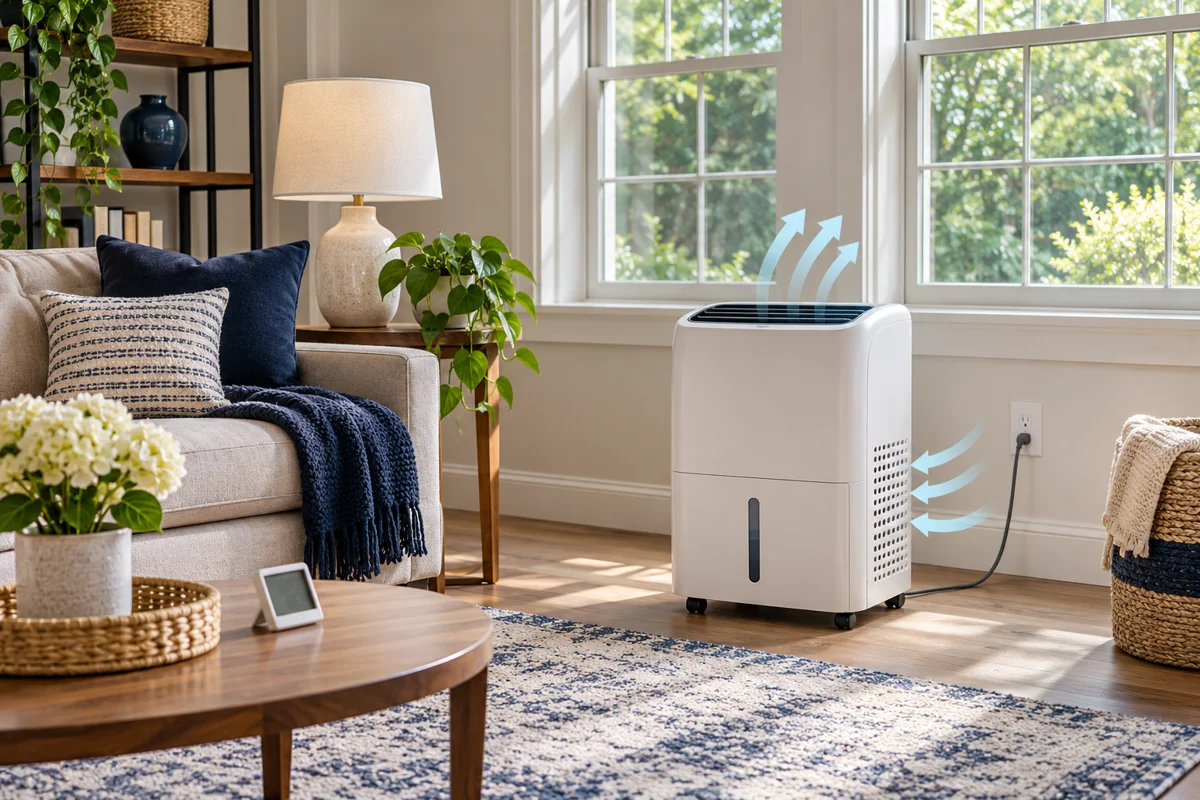
If measured humidity remains excessive after source correction and appropriate AC operation, dedicated dehumidification may be useful. It can remove moisture when the building does not need much temperature reduction. The choice might be a portable unit for a defined area or a ducted system for broader coverage.
Compare the actual conditions, capacity at relevant temperatures, air distribution, drainage, controls, noise, and maintenance. A unit's headline coverage number does not replace that assessment. A ducted installation should explain how it interacts with the existing blower and where dry air is delivered.
Dehumidification uses electricity and releases heat in the process. Discuss comfort and operating cost using realistic assumptions. It should not be sold as free moisture removal or as a cure for an ongoing building leak. Ask for a defined humidity goal that is appropriate for the house and season rather than a universal setting.
What a professional diagnostic scope should include
Provide the equipment model, humidity log, operating settings, and recent changes. Ask whether the assessment considers the coil, drainage, airflow, filter, controls, and the building's moisture sources. If sizing is suspected, clarify whether load analysis is included or requires a separate scope.
Request measured findings and the reason for each recommendation. A claim that refrigerant adjustment will fix humidity should be supported by appropriate equipment testing, not by the room feeling clammy. Likewise, a proposal to replace equipment should explain the expected benefit and the sources it will not address.
If the problem is intermittent, ask how weather and occupancy affect the interpretation. A short visit on a dry day may not reproduce the concern. The contractor should identify any limits to the assessment and a plan for checking results under more representative conditions. Good records make that follow-up more productive.
Two common questions about thermostat settings
Will lowering the temperature remove more moisture? It may extend cooling operation, but it can also make the home uncomfortably cold, use more energy, and increase condensation risks on cold surfaces. It is not a substitute for identifying the reason humidity remains high. Discuss equipment-specific humidity controls and source management instead of chasing a colder number.
Should the fan stay on all day? That depends on the system and the purpose of circulation. A continuous fan does not automatically provide fresh outdoor air, and its effect on moisture depends on the equipment. Record the current mode and ask for a recommendation tied to your installation.
If windows or other surfaces show condensation, record where and when it occurs. That observation can help identify a temperature or moisture interaction. Do not assume that the thermostat-area reading represents the basement, closets, or exterior-wall surfaces throughout the building.
Include closets and lower-level spaces in the comparison
A hallway can feel comfortable while a cool basement or closed closet remains damp. Record these spaces separately, including visible condensation or stored materials against exterior walls. Do not assume the central humidity display represents their conditions. Ask whether air distribution, surface temperatures, moisture entry, or a local treatment need explains the difference.
If the proposed solution relies on air moving between rooms, discuss normal door positions. The system should be evaluated for the way the home is actually used, not only with every door open during a short service visit. That detail helps establish a realistic moisture-control plan.
Define success before agreeing to work
Agree on a practical result: comfortable temperature, improved moisture control during representative conditions, and suitable equipment operation. Ask which measurements or observations will be compared after service. Keep the dates of repairs, control changes, ventilation adjustments, and dehumidifier installation so their effects can be evaluated.
Clucas Mechanical Heating and Air serves Burbank, Oak Lawn, and nearby south and southwest suburbs. Share the property ZIP, cooling equipment type, humidity pattern, and any visible water concerns. Coverage, availability, assessment scope, and proposed work are confirmed for the request.
A useful solution may combine source repair, control correction, airflow work, and dedicated dehumidification. The evidence determines that combination. A cool thermostat reading is one piece of the comfort picture; the moisture conditions and the way the home is used deserve equal attention when the house still feels damp.
Sources & further reading
Research checked November 21, 2026. These sources support the technical principles; the planning worksheets apply those principles to customer decisions. Older technical publications are background, not a statement of current local code. Equipment instructions, applicable requirements, and a qualified property-specific assessment determine the actual work.