An air-side economizer uses suitable outdoor air to help cool a commercial space, reducing mechanical cooling when conditions allow. Its performance depends on sensors, dampers, controls and relief paths. A cool day or moving damper does not prove correct operation; a technician should verify the full operating sequence.
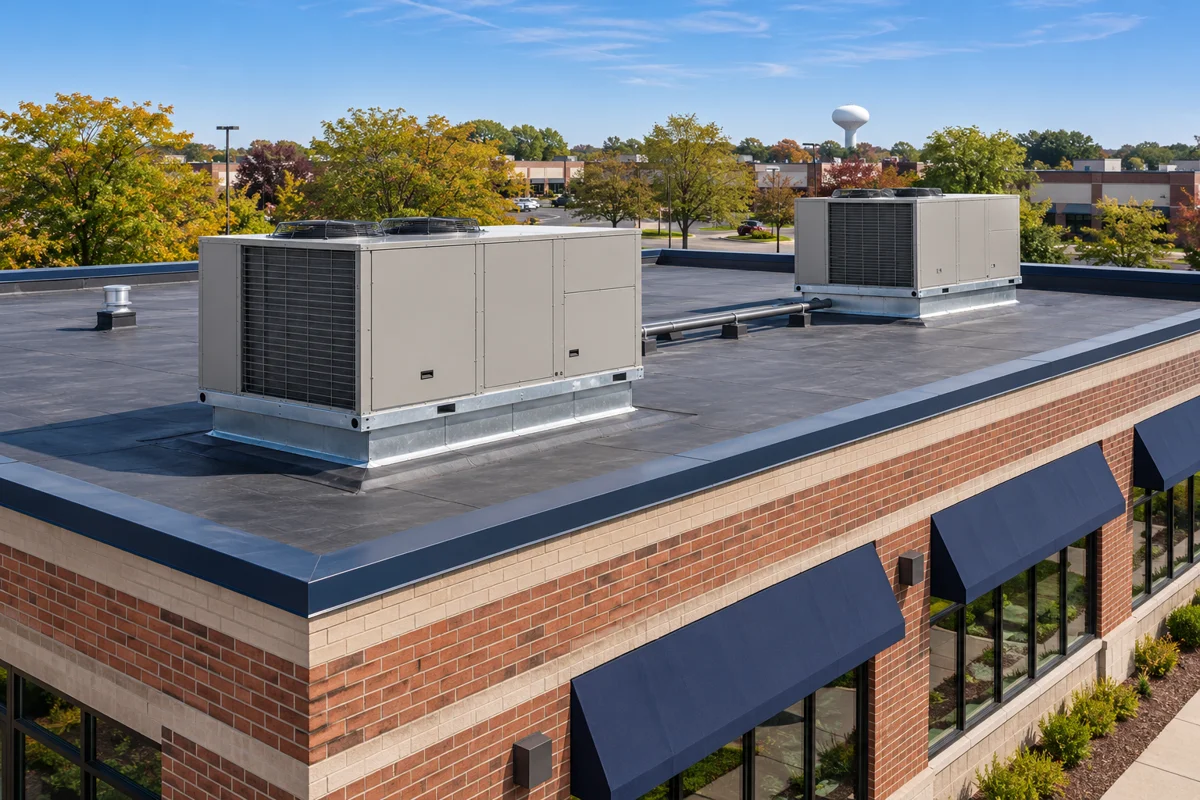
An economizer uses suitable outdoor air for cooling
An air-side economizer can increase outdoor airflow when outdoor conditions are suitable for helping cool a commercial space. That can reduce the need for mechanical cooling during eligible conditions. The system must also manage return or relief air and coordinate sensors, dampers, fans, and cooling stages.
The word free is sometimes used to describe economizer cooling, but fans and controls still use energy, and outdoor air must be appropriate for the conditions and design. Temperature alone may not tell the whole story. Depending on the control strategy, moisture or other inputs can affect whether outdoor air is suitable.
A cool day does not prove the economizer works, and a visible damper position is not a complete functional test. The useful question is whether the installed system follows its intended sequence under the relevant conditions. That requires qualified assessment and documented control and airflow behavior.
Economizer cooling and minimum ventilation are different functions
Commercial outdoor-air dampers can serve more than one purpose. A minimum outdoor-air arrangement supports the building's ventilation needs during occupancy. Economizer operation may bring in more outdoor air when it can help meet a cooling demand. The correct position and sequence vary with mode and system design.
Closing a damper to stop an unwanted draft can therefore affect ventilation as well as energy use. Opening it fully to obtain more cooling can create unsuitable moisture, heating, or pressure conditions. Neither action should be a casual staff adjustment.
Ask the professional to explain the normal occupied, unoccupied, heating, mechanical-cooling, and economizer states for the installed unit. The owner should understand which functions were tested. A unit can produce comfortable temperatures while an outdoor-air function remains wrong, especially when the weather temporarily hides the problem.
Six components of a meaningful check
The exact equipment and controls determine the test method. A qualified technician should follow the manufacturer and design requirements rather than substitute a generic damper position for full verification.
Ask which of these functions are present and included in the service scope. Not every unit has the same arrangement. A report that says economizer checked should identify the actual test and any conditions that could not be verified during the visit.
- Sensors must report credible conditions and provide the inputs expected by the controller.
- Dampers and actuators must move through the intended range without binding or disconnection.
- Control logic must enable and disable economizer operation under the intended conditions.
- Cooling stages and fan operation must coordinate with the economizer sequence.
- Return, relief, or exhaust paths must support the intended air movement and building pressure behavior.
- Minimum ventilation and special overrides must remain appropriate when economizer cooling is not active.
A step-by-step owner preparation plan
Owners and managers can provide context without entering rooftop equipment. Leave roof access, energized tests, damper adjustment, and sensor work to qualified personnel following the building's procedures.
Do not request a manual damper opening as a shortcut to prove the equipment can cool. A forced state may bypass the very logic that needs assessment and can create another operating problem if it is not restored correctly.
- Identify the unit and area served from existing asset records and control documentation.
- Collect complaints about drafts, humidity, temperature, unusual operating hours, or simultaneous equipment behavior.
- Provide current occupancy schedules and any recent tenant, layout, or control changes.
- Share previous economizer repairs, sensor replacements, overrides, and balancing records if available.
- Request a documented functional test that distinguishes minimum ventilation from economizer cooling.
- Review findings, approved corrections, deferred seasonal tests, and the normal operating settings left at completion.
Symptoms that can justify an investigation
Possible clues include unnecessary compressor operation during otherwise suitable outdoor conditions, cold drafts, high heating use, humidity complaints, unexpected damper behavior, or a control fault. Each can have other causes. The investigation should avoid diagnosing an economizer failure from a utility bill alone.
Timing helps. Record whether the issue occurs during morning startup, occupied cooling, heating, or a particular weather pattern. Note whether staff have used overrides or changed schedules. If the problem followed a controller or thermostat replacement, that history is especially relevant to configuration checks.
The professional may need to compare actual conditions with the controller's inputs and intended enable logic. An outdoor sensor that reads plausibly at one moment can still require assessment. A damper that moves under a service command does not prove it responds correctly during automatic operation. Ask for evidence of the sequence, not only component motion.
Temperature and enthalpy strategies need explanation
Some economizers use outdoor temperature information; others use strategies involving humidity or enthalpy, a measure related to the air's heat content. The design and controller determine the appropriate approach. It is not useful for an owner to choose a universal changeover setting from a general article.
Ask which strategy the installed equipment uses, what sensors it requires, and whether the configuration follows the applicable equipment and building requirements. If a sensor is replaced, confirm that the replacement type and configuration are compatible. Similar-looking parts can serve different control needs.
Moisture matters because outdoor air can be cool yet humid. A simplistic temperature-only interpretation of free cooling can overlook the latent load. Conversely, complicated controls do not guarantee good performance if sensors, dampers, or maintenance are neglected. The recommendation should fit the system and be testable by the service provider.
Relief paths and pressure are part of operation
Increasing outdoor air changes the building's air balance. The design may use return dampers, relief openings, exhaust, or other arrangements to manage the air leaving the building. A restricted or unsuitable path can affect pressure and intended airflow even when the intake damper opens.
Ask whether the assessment includes the relevant relief or exhaust function and building interactions. A door-pressure complaint or unwanted drafts may be important context. In a multi-tenant building, other systems and spaces can affect the result, so one unit should not always be considered in isolation.
Do not prop doors open or remove panels to create an improvised relief path. Those changes can affect security, weather protection, fire separation, and system behavior. If the design is unclear or altered, the contractor may recommend engineering or balancing work. That is different from a simple component repair and should be scoped accordingly.
Maintenance, repair, or controls retrofit?
A stuck actuator, damaged damper, loaded filter, failed sensor, unsuitable setting, and outdated control arrangement require different responses. Some can be addressed through ordinary service or repair; others may justify a more extensive controls project. The recommendation should identify which condition is confirmed.
Ask how the proposed work will be verified and whether it changes the intended operating sequence. A retrofit can offer benefits when the equipment and building suit it, but an energy-saving percentage from another building is not a forecast for yours. Local hours, weather, equipment condition, and existing control problems matter.
Compare repair and retrofit costs with realistic operating assumptions. Include future maintenance, access, documentation, and compatibility with existing controls. A new controller should leave the owner with a maintainable arrangement and a clear service path. It should not turn ordinary schedule changes into an unexplained dependency on one installer.
What the closeout report should show
Request the asset identifier, controller and sensor details where relevant, tested modes, observed response, settings, corrections, and limitations. If weather prevented a complete test, identify the remaining verification and who will perform it. A note that a new actuator was installed is not the same as confirming the whole sequence.
Keep any functional-test record with the unit's maintenance and control documents. The next provider should be able to understand the intended sequence and what changed. Staff should know which user controls are available and which service settings require authorization.
Review the system after a reasonable period of ordinary use. Compare the original complaints and operating conditions, not just the equipment's ability to turn on. If energy use is evaluated, account for weather, occupancy, and schedule changes. A lower bill in a milder month is not enough to isolate the economizer's contribution.
Restore every temporary test condition
Functional testing can involve temporary commands or settings managed by qualified personnel. Ask the provider to confirm that test overrides were removed and normal automatic control was restored. An economizer left forced open or disabled after a successful component test can create a new operating problem.
The closeout record should identify any intentional temporary condition, its reason, and the follow-up required. Staff should not be left to guess whether a visible override is a fault, a service test, or an approved short-term arrangement. That simple handover detail helps preserve the value of the technical work.
How to request economizer assessment
Provide Clucas Mechanical Heating and Air with the ZIP, business use, asset records, operating hours, and the reason for the request. Include any previous reports, controller changes, and known overrides. Explain whether the concern is energy, comfort, humidity, outdoor air, or a combination.
Commercial equipment scope, coverage, and availability in Burbank, Oak Lawn, and nearby south and southwest suburbs are confirmed for the property. Ask whether the work includes functional testing, controls coordination, and any needed balancing or specialist involvement. Do not assume a filter-change visit includes all those tasks.
The customer value comes from knowing what the system is intended to do and whether it actually does it. An economizer is a coordinated cooling and air-management function. Component replacement is complete only when the relevant operating result has been checked and any remaining limits are documented.
Sources & further reading
Research checked November 21, 2026. These sources support the technical principles; the planning worksheets apply those principles to customer decisions. Older technical publications are background, not a statement of current local code. Equipment instructions, applicable requirements, and a qualified property-specific assessment determine the actual work.